
In the fifth part of the AI and the channel feature, we asked what we need to do to realise AI’s full potential in South Africa and Africa.
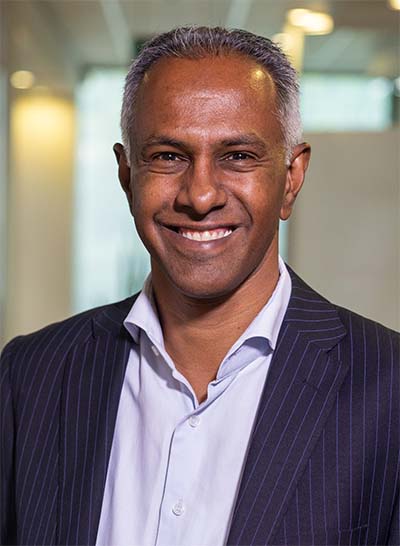 Ziaad Suleman, senior vice-president and CEO at Cassava Technologies, SA and Botswana
To unlock AI’s full potential, Africa must accelerate investment in high-performance sovereign infrastructure. Our One Cassava ecosystem, with AI Factories powered by our data centre network, ensures data stays within regional borders. Coupled with our extensive fibre backbone and cloud offerings, this foundation can support a thriving AI ecosystem, positioning infrastructure and talent development as the cornerstones of Africa’s AI future.
Building a sustainable AI ecosystem requires developing local talent through initiatives like Cassava Academy, university collaborations, and community programmes that equip entrepreneurs and developers with the necessary skills to manage and innovate with AI systems.
To ensure responsible AI deployment, Africa needs to develop clear regulatory frameworks, risk-based policies, and local sandbox environments that address legal, ethical, and intellectual property concerns specific to the continent’s markets.
Werner Herbst, MD of First Distribution
It starts with strong foundations. Organisations need to invest in skills, build robust data strategies, and adopt modern, cloud-based platforms that can support AI at scale.
Partnerships will be critical, particularly in accessing the expertise required to deploy and manage AI solutions effectively.
Most importantly, businesses need to move beyond pilots and take a more strategic approach to embedding AI into core processes and decision-making.
Ravi Bhat, commercial solutions and AI officer at Microsoft South Africa
Five priorities matter most: AI-ready infrastructure, strong data foundations, skills at scale, responsible AI governance, and workflow transformation. These must move together if AI is to deliver meaningful national and continental impact.
We are investing against those foundations through infrastructure, connectivity, multilingual AI, and skilling. Through our AI Skills Initiative, we have engaged 4 million learners, trained 1.4 million individuals and credentialed nearly half a million citizens in AI skills. This is part of a broader goal to upskill 30 million people across the continent. The right model is public-private collaboration, local relevance, and practical capacity building, because Africa does not need AI in the abstract. It needs AI that is trusted, useful, locally relevant, and backed by the right foundations.
Barry Buck, chief technology officer at Saucecode
Playbooks. The vendors spent a decade perfecting these models and almost no time teaching us how to run them. The experience today is: “here’s an extraordinary tool, there’s no instruction manual, good luck.” If the frontier players put even a fraction of that genius into distilling how a business should work with AI day to day, Africa wouldn’t just adopt the technology — we’d get full value from it. The tool was never the missing piece. The method is.
Ebrahim Essop, senior automation solution manager at Nedbank CIA Robotics
Realising the full potential will require a balanced focus on data foundations, talent development, strong governance, and practical use-case prioritisation. Collaboration between government, industry, regulators and academic institutions will also be critical to creating an enabling environment for responsible and scalable AI adoption.
Our governments should be working with key technology/infrastructure players to get us to the same level of data centres like the US, Europe and Asia, while our academic institutions should be changing the way students of all levels learn, making them ready to join and contribute to the future way of work.
Othelo Vieira, technical product manager lead at Cloud On Demand
In South Africa, the priorities are: fix the data fundamentals (which means investment in data governance, not just data collection), build the skills pipeline aggressively through universities and industry partnerships, and create regulatory clarity so organisations can plan with confidence. We also need to connect AI investment to real economic priorities — load-shedding resilience, job creation, township economy development — rather than treating it as a prestige technology. For Africa broadly, infrastructure is the foundation: reliable power and connectivity are prerequisites that can’t be skipped. Beyond that, African countries need to develop AI capabilities that address African problems — not just import solutions built for other contexts. Regional data-sharing frameworks and collaborative AI research institutions could accelerate this significantly. The countries that will win are those that move from being AI consumers to AI producers.
Andre Hogewoning, chief operating officer at Business AI
We have identified five critical success factors that it believes will determine the trajectory of AI adoption across South Africa and the broader African continent:
- Education — the non-negotiable foundation
- Use local — support the African AI ecosystem
- Rand-based pricing — removing currency risk from the AI investment decision
- Realistic value propositions — honesty over hype
- Robust change management and reliable partners — the human architecture of AI success
Ryan Martyn, co-founder and chief marketing officer of Syntech Distribution
Businesses need to get specific: choose defined areas to apply AI and set clear ROI and output expectations from the outset. Just as important is preserving critical thinking. Humans still need to apply judgement and guardrails as AI adoption grows, because the businesses that build these processes properly will outperform those that just accept generic AI output. Investment in data quality, structure and workforce skills also needs to happen in parallel.