
We know it’s said annually when we survey some of the leading players in the IT channel for their outlook on the coming 12 months for the first issue of the year: ‘It’s going to be a tough year, but …’
The resilience, character, optimism, and sheer tenacity of the South African channel always shines through the darkest of gloom. And this year looks like no exception. There’s a current global crisis with the shortage of memory and components which is seeing skyrocketing price increases and affecting supply; geopolitical tensions continue to impact shipping costs and delivery times; and everyone’s unsure of just what the future holds for AI and whether it can be successfully commercialised.
Yet the local channel will always find silver linings: The rand has strengthened against the dollar; interest rate cuts are on the cards; the economy is looking to rebound. So, yes, it’s going to be another tough year … but …
By Mark Davison
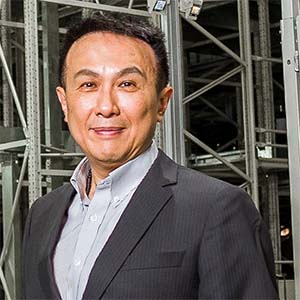 One of the pioneers of the South African distribution channel and industry veteran, Mark Lu, says the IT channel enters 2026 facing one of its most complex transitional periods in decades.
“What makes this moment unique is that multiple layers of disruption – hardware, software, and business models – are unfolding simultaneously,” Lu says.
“On the hardware side, severe shortages and supply constraints across critical components such as HDDs, SSDs, and DDR4/DDR5 memory continue to place immense pressure on the ecosystem,” he explains. “Distributors and resellers are operating in an environment where channel supply support has deteriorated, price stability is elusive, and margins are increasingly unpredictable.
“This is no longer a temporary supply chain hiccup,” Lu continues. “AI infrastructure demand, hyperscaler procurement dominance, manufacturing concentration risks, and geopolitical factors have created structural distortions. Traditional channel players – especially mid-sized and smaller resellers – are finding it difficult to absorb prolonged volatility. Working capital stress, inventory risk, and shrinking profitability are accelerating consolidation trends.”
And Lu doesn’t see the situation improving in the short-term.
“Unless there is a significant normalisation of component supply or a moderation in AI-driven capital expenditure, the hardware channel will remain under strain,” he says. “Survival is becoming less about scale and more about financial discipline and operational agility.
“Software markets, meanwhile, are undergoing a quieter but equally profound reset,” Lu continues. “Capital markets have begun repricing SaaS companies as investors reassess long-held assumptions around subscription-based revenue models. The emergence of AI agents is challenging the foundational metrics of ‘per-seat’ and ‘per-user’ pricing.
“Enterprises are evaluating technology purchases through an outcome-oriented lens. Instead of paying for access to software tools, customers are exploring models tied to completed tasks, business cases, or measurable results. AI agents capable of executing workflows autonomously blur the boundary between software and digital labour, forcing vendors to rethink value propositions and monetisation strategies.”
For the channel, Lu says, this shift has material implications. “Revenue streams built primarily on licence resale or subscription aggregation may compress. Value creation is migrating toward advisory services, integration, AI orchestration, automation design, data governance, and risk management. Partners that remain transactional risk disintermediation.
“AI sits at the centre of this transformation. Beyond technology, it is reshaping how vendors and customers interact. Direct-to-consumer (DTC) strategies are strengthening as vendors leverage AI to personalise engagement, automate sales motions, and build tighter customer relationships. This naturally reduces the relative space occupied by traditional intermediaries.”
However, Lu is quick to point out, “smaller pie” does not necessarily mean “no pie”.
“The channel’s future lies in specialisation,” he says. “Complexity has not disappeared – it has intensified. Enterprises still require expertise to integrate AI into legacy environments, manage multi-cloud architectures, ensure compliance, and mitigate cybersecurity risks amplified by AI adoption.
“We have already witnessed that major distribution firms are aggressively cutting down cost structures, streamlining portfolios, and tightening credit policies. Efficiency and resilience are overtaking expansion or ambition.”
Ultimately, Lu says, 2026 is less about decline and more about forced reinvention.
“The channel needs to redefine its relevance in an AI-native, outcome-driven, and increasingly direct-engagement world,” he says. “Those who evolve will remain indispensable. Those who do not may validate the narrative of obsolescence.”
 Tim Humphreys-Davies, CEO of Pinnacle and with nearly three decades of experience in distribution, has witnessed too many peaks and troughs on the channel rollercoaster to remember. But the current situation, he says, is very different.
“The local and international IT supply industry faces unprecedented challenges in terms of supply and volatility in pricing at present,” Humphreys-Davies says. “As AI hyperscalers have consumed the traditional, normal supply of memory and SSD hard drives, the market has gone into shortage mode and hence the price increases and supply constraints we’re seeing now.
“The impact has been felt in the supply of laptops and desktops from all major suppliers into southern Africa and, as distributors, we are struggling to secure consistent supply,” he continues.
“We have also felt this in the data centre compute and storage space. While the stronger rand has buffered these price increases to a small degree, we are still seeing upwards of 20% to 25% increases in laptops and 30% from some suppliers of memory and storage rich compute systems.
“This, coupled with the increased demand for AI ready PC’s and the move to Windows 11 has really challenged local supply.
“AI is now more prevalent in the workspace, and these increased workloads are forcing change in the workplace with users demanding increased power on their devices,” Humphreys-Davies says. “AI PCs are projected to represent 31% to 43% of worldwide PC shipments by the end of 2025 – up dramatically from just 15% to 17% in 2024.
“This rapid shift represents a fundamental change in what manufacturers are producing and supplying to the market.
“Coupled with that, the Windows 10 end-of-life deadline in October 2025 drove enterprises and consumers to rush for new hardware, contributing to an 8,2% growth in global PC shipments in Q3 2025,” he adds. “This created a significant boost in demand that suppliers worked to meet, but which they are struggling with. The supply chain has adapted by integrating neural processing units (NPUs) into PCs, shifting from cloud-reliant AI to on-device processing. This represents a fundamental change in PC architecture and component requirements – similar to the GPU revolution two decades ago – and hence price increases.
“As distribution we are attempting to secure supply so as not to impact our customers too heavily,” Humphreys-Davies says. “However, we see end customers still expecting price stability. This poses a real challenge for the channel as a lot of end users are perhaps not aware of these global supply shifts.
“My advice to the channel is to constantly engage with your customers as supply is predicted to be challenged for the next 18 months and end customers need to be aware that it is not going to get better any time soon,” Humphreys-Davies says.
 Craig Brunsden, CEO of Axiz, sees similarities in the current shortages and pricing situation to what the channel experienced during the Covid-19 pandemic with global lockdowns and the subsequent massive disruption in supply chains and on businesses.
“Just as we were flagging under the bombardment of the AI messaging from vendors – and the guilt that we don’t understand it and have no plan to exploit it – comes the shock of shortages and surging prices,” Brunsden says.
“The message from all the major vendors is now consistent and escalating: Pricing is surging, and vendors will not guarantee supply until minute of order. We are anticipating one of the biggest supply shocks since Covid-19 – but, unlike the pandemic era, no-one seems to be able to fathom why.
“Personally, I don’t buy the story that the current crisis is all down to AI,” Brunsden says. “Either the global IT OEM community was just rendered subservient to the dominant AI players overnight, or the entire established industry misjudged this and managed the supply poorly. Or is there a bigger geopolitical game at play? Perhaps all of the above.
“Either way, we are expecting 2026 to be a very challenging time for hardware supply from vendors and partners will have no choice but to salvage what we can,” Brunsden says. “Perhaps it’s a good time for a reset, to focus on the key basics that matter to our business.
“Again, personally, I expect it to blow over a little sooner than the worst-case scenarios being painted, bearing in mind that the established global ecosystem still has some clout with the supply chain.
Brunsden, however, remains upbeat about the local market – like many channel veterans he understands the vagaries of one of the toughest markets in the world … and how to strategise for them.
“Locally, and supply aside, the rand is in better shape against the dollar compared to previous years alleviating some pressure from price increases – and big South African IT budgets are looking promising, just waiting for economic and IT clarity to be deployed.
The GNU looks like it is maturing, power supply has stabilised and, in general, the outlook is positive.
“As partners, our mission continues,” Brunsden says. “Build out our core competences, consolidate key partnerships and, most importantly, keep a level head during times of disruption.
“While things may be uncertain, there are just too many vendors that need to deliver results for this to last for longer than our partnerships can handle.
“Software investments and renewals continue to be critical to staying relevant, cybersecurity is more important than ever, and data security and resilience remain critical focus points in order to exit the hardware turbulence in good shape,” he says. “Let’s stay connected … we’ve done this before.”
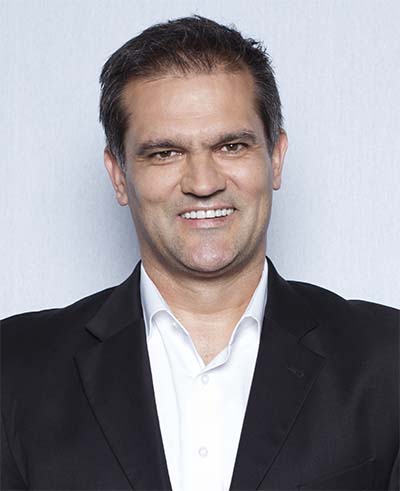 Like all local distributors, Neels Coetzee, MD of Mustek, says the company is continually monitoring the situation regarding the current components shortage and is navigating its way through it.
“The cost of key components like memory, CPUs, SSDs and graphics cards has risen sharply due to the crisis and we expect price fluctuations to continue for the rest of 2026,” Coetzee says.
“And, while the rand may have strengthened against the dollar helping to buffer some of these price increases, it hasn’t strengthened enough to fully nullify them.
“Alternatively, if AI demand suddenly cools, the current memory over-investment could lead to a sharp market correction in terms of pricing.
“Availability is another problem,” he adds. “At the moment, these critical components are still available, but concern is growing that even at elevated prices, availability might become constrained. We expect to see reductions in certain product specs – less RAM (8Gb instead of 16Gb) in new systems, for example, to try and keep devices affordable for the price-sensitive South African market.”
As far as the wider market is concerned, Coetzee is cautiously optimistic about the year ahead.
“A stronger rand combined with a lower, more stable inflation rate – targeting 3% this year – is expected to increase consumers’ real disposable income over the medium- to long-term,” he says. “And anticipated further reductions in interest rates could also assist in improving overall market sentiment.
“Retail is more exposed to economic pressure, but corporate, infrastructure, and ICT services are expected to be more resilient,” Coetzee adds.
“This bodes well for the many distributors and resellers that are strategically shifting from simple hardware sales to bundled services, cloud solutions, and value-added consulting to improve margins.”
 Andrew Harris, chief sales and marketing officer at DCC Technologies, believes the South African channel is entering another complex year, but not an unpredictable one.
Harris says volatility has become structural rather than cyclical.
Currency shifts, rising logistics costs, and vendor pricing pressure are all interacting at once – and the strengthening rand has masked rather than solved the underlying cost reality.
For Harris, the dividing line between distributors who merely trade and those who have built resilience lies in margin discipline.
“When times are tough, you have to focus on responsible profit,” he says. “Distribution is ultimately a service function to the industry, delivering vendor technology to end users. If that service is not delivered sustainably, there is no tomorrow.
“In an environment where vendors are driving aggressive AI roadmaps while simultaneously facing supply chain constraints, responsible trading is not optional, it is essential.”
On supply chain volatility, Harris takes a pragmatic view.
“Vendors have secured supply into their regions, but pricing certainty has fallen away,” he explains. “I would rather operate with certainty of supply than with artificially low prices that cannot hold.
“The market needs to accept that pricing has structurally shifted. The focus should therefore move to creative financial models, faster procurement cycles, and closer collaboration across the channel.
“End users can no longer rely on long tender cycles and delayed decisions while expecting prices to remain static,” he says. “Decisiveness and loyalty will matter more in a constrained environment.”
The current component crisis is being place squarely on AI, but Harris says the technology remains the single biggest opportunity for the channel.
“The move to on device intelligence and tools such as Copilot represents a genuine step change in user experience and productivity,” he says.
“However, the greatest risk is not volatility itself, but a widening gap between technology ‘haves’ and ‘have nots’.
“If pricing and access prevent broad adoption, the ecosystem risks fragmenting into two technology tiers with serious implications for education and digital inclusion.
“For mid-sized resellers, the message is clear,” Harris says. “Competing purely on price in a scarce market is unsustainable. The priority must be a more strategic go to market approach and a stronger advisory function.
“Resellers need deeper understanding of customer environments and should position themselves as partners in digital transformation rather than transactional suppliers.
“In any market defined by scarcity the resilient and thoughtful planning organisations are the ones that endure,” Harris says.
 Werner Herbst, MD of First Distribution, says that from a South African distribution perspective, the year ahead feels familiar in many ways – tough, uncertain, but not without opportunity.
“We’ve become quite good at operating in complex environments and while there are some green shoots, there’s no question that the channel will need to work harder and smarter to make meaningful progress this year,” Herbst says.
“The rand has shown some welcome strength which, on the surface, creates a sense of optimism.
“However, for distributors who measure performance and growth against dollar-denominated purchases, a stronger rand presents its own challenge. In simple terms, we now need to sell more in rand value to achieve the same growth objectives.
“That dynamic places additional pressure on volumes in an economy that is not expanding meaningfully,” he says. “Higher memory and component prices may become an unpopular but unavoidable part of that equation – even though that is never an easy message to take to market.”
Herbst says that the sluggish South African economy continues to dog the industry – and the channel.
“The local economy simply isn’t growing at the pace any of us would like,” he says. “That reality shapes everything – demand, margins, risk appetite and, ultimately, sustainability. In this kind of environment, outpricing competitors is rarely a viable long‑term strategy. The only real way forward is to out-service, out‑execute, and out‑partner.
“For distribution, the challenges remain layered,” Herbst continues. “Global memory and component shortages haven’t disappeared – they’ve just become more nuanced.
“Availability fluctuates, lead times shift, and planning remains difficult. Holding large volumes of stock ‘just in case’ is no longer the answer.
“What partners increasingly need are tailor-made solutions: flexibility, visibility, alternative sourcing strategies, and the ability to respond quickly when supply tightens.
“Distribution is becoming far more platform-driven – less about boxes on shelves and more about intelligent enablement.”
Herbst says that the local channel is facing a number of new challenges … and some traditional, old chestnuts.
“One area where we will see accelerated change is marketplaces,” he explains. “Software distribution through marketplaces is no longer a future concept – it’s becoming inevitable. Consumption models, licensing flexibility, and integrated billing are increasingly what customers expect and our partners need to embrace this evolution.
“At First Distribution we’ve invested heavily to ensure we’re ready to support partners in this shift, because marketplaces are not about replacing the channel – they’re about enabling it to stay relevant in a changing world.
“Another growing pressure point, particularly in South Africa, is credit,” Herbst continues. “As margins tighten and cash flow remains under strain, access to credit becomes more challenging – especially for SMME and SMB partners.
“Distribution has always played a critical role here and that role is becoming even more important. Supporting partners responsibly with credit, while managing risk in a constrained economy, is one of the toughest but most essential functions distributors will perform in the year ahead.
“AI, of course, continues to dominate conversation,” he says. “While the long‑term potential is undeniable, there’s still uncertainty around near‑term commercial viability for many local customers.
“The channel’s responsibility is to cut through the noise – to focus on practical, real‑world use cases that deliver value now, while helping customers understand where patience and experimentation are still required.”
But, like his peers, Herbst remains buoyant about the coming months.
“If there’s one thing the South African channel has proven time and again, it’s resilience,” he says. “The year ahead won’t be easy, but it will reward those who adapt, collaborate, and stay close to their partners and customers.
“Distribution remains a critical backbone of the ecosystem – not just as a supplier, but as a problem‑solver, enabler, and trusted partner.
“In a low‑growth economy, success won’t come from chasing volume at all costs,” Herbst advises. “It will come from service excellence, smarter platforms, strong relationships, and the ability to help partners navigate complexity with confidence.”
 Jonathan Newton, commercial director at MiRO Distribution, is optimistic that the hurdles currently facing the channel – while seemingly daunting – can be overcome.
“If we look solely at the local indicators, 2026 has dawned with a sense of quiet, well-founded optimism,” Newton says. “The rand has strengthened, showing resilience against major currencies, and we are seeing a much-needed easing of interest rates. The year has gotten off to a positive start and the local economy feels poised for growth.
“However, as global citizens, we know that local conditions are only half the story,” he says. “While South Africa is stabilising, the global supply chain is entering a period of renewed volatility that we and our partners must navigate wisely.
“We are currently facing a memory chip shortage, the magnitude of which has yet to be fully felt. The explosive global demand for AI-capable hardware means that memory manufacturers are pivoting their production lines to serve the development of high-end AI data centres and hyperscalers.
“This has created a vacuum for standard DRAM and NAND flash memory, the components that power the wired and wireless networking products we all rely on.
“We expect this to ripple through the channel this year, manifesting as stock constraints on various networking devices and an inevitable increase in pricing due to demand outstripping supply,” he adds.
Newton says another factor compounding the component shortage is the ongoing unrest in the Middle East and persisting global conflicts.
“The disruption to key shipping routes is forcing freight carriers to take longer routes or face higher insurance premiums,” he says. “For the South African channel, this means inflated component costs at the factory level and increased logistics costs to get the product to our shores.
“But despite these challenges, the outlook remains positive because we are prepared. Some of the vendors we represent at MiRO have been proactive and have secured significant allocations of memory chips to ensure production lines keep moving. However, this security comes at a premium. The vendors have secured the stock, but at inflated prices, which will unavoidably filter down to the channel.
“For those product lines that are affected by supply constraints, we have placed backorders to ensure that we secure stock as it becomes available. The era of ‘just-in-time’ ordering is temporarily behind us,” Newton says.
“To deliver for your clients, the strategy must shift to forward planning . It’s important to communicate early, place back orders or seek alternatives for affected product lines and manage expectations by being transparent about the global pricing pressures.
“At MiRO, we are committed to buffering our partners against the worst of these shocks through our own stock holding and vendor relationships,” he says. “The opportunities in South Africa this year are immense; the economy is opening, and the demand for connectivity is higher than ever.
“By planning and acknowledging the global reality, we can turn these supply chain hurdles into a competitive advantage.”

Craig Nowitz, CEO of Syntech.
Craig Nowitz, CEO of Syntech, is another channel veteran who always sees the glass as half-full rather than half-empty.
“The South African technology channel enters 2026 with a blend of optimism and realism,” Nowitz says. “The rand has shown encouraging signs of strengthening, and demand across several consumer and enterprise categories remains steady. But beneath that optimism lies a global supply chain under significant pressure – driven by DRAM and NAND shortages, CPU constraints, GPU pricing volatility, and the disruptive influence of AI on both supply and demand.”
Nowitz says that AI is reshaping the semiconductor landscape.
“The most powerful force shaping our industry is the unprecedented global demand for AI infrastructure,” he explains. “Hyperscalers are consuming enormous volumes of DRAM, NAND, and high‑bandwidth memory, and manufacturers are prioritising these high‑margin enterprise clients. The result is a structural shortage that is pushing prices up across the board.
“This is not a temporary fluctuation. It represents a fundamental repricing of memory and storage.
“Consumer‑grade DDR4 and DDR5 modules now experience weekly volatility,” he says. “NAND wafer prices have surged, server SSDs are up more than 50%, and consumer SSDs are following the same trajectory. Even with a stronger rand, South Africa is absorbing the full impact of these global pressures.”
Nowitz says the pressure is spreading across the component ecosystem:
Intel has already implemented price increases, with more expected.
AMD is facing desktop CPU shortages as production shifts toward server processors.
GPU pricing is rising, driven partly by the escalating cost of DRAM – a major component in modern graphics cards.
“These dynamics are creating a ripple effect across the entire PC hardware market,” he says.
“A significant amount of DRAM, NAND, and CPU inventory is currently being traded on the open market,” Nowitz adds. “From my perspective, we may soon see companies begin releasing this stock to capitalise on high prices. If that happens, it could temporarily pause – or at least slow – further price increases.”
Nowitz says Syntech is taking a proactive approach to stabilising supply and supporting its partners by:
- Strengthening vendor partnerships.
- Investing in forecasting and analytics.
- Diversifying product lines.
- Enhancing logistics and warehousing.
- Communicating transparently with resellers.
“Diversification is especially important,” he stresses. “Syntech is constantly evaluating new categories to give resellers fresh opportunities. We are currently assessing several new robotics products, for example, and we expect to share some exciting developments in the near future.
“Despite the challenges, 2026 offers real growth opportunities. AI‑adjacent categories, creator and gaming markets, SMB digital transformation, and value‑added services all remain strong. With the right strategy, 2026 can still be a year of meaningful progress.
“The channel’s resilience has always been its greatest strength,” Nowitz concludes. “With clarity, adaptability, and strong partnerships, 2026 can be a year where the industry not only survives – but evolves and thrives.”