
By Kathy Gibson – Artificial intelligence (AI) and cybersecurity skills are in demand across Africa, and companies are keen to boost training in these areas.
This is the headline finding from a CompTIA survey carried out by Channelwise, which polled IT companies and resellers across Africa on their skills strategies.
However, while new technology and an abundance of cyberthreats dominate the skills wishlist, companies are still battling to get their staff up to speed on some of the more traditional technologies as well.
A majority of respondents cited cybersecurity as the most challenging area, with 66,7% currently battling to find the relevant skills. AI implementation and practical skills was a close second at 54,7%, followed by cloud (29,3%), networking (25,3%), software development (24%) and data (14,7%).
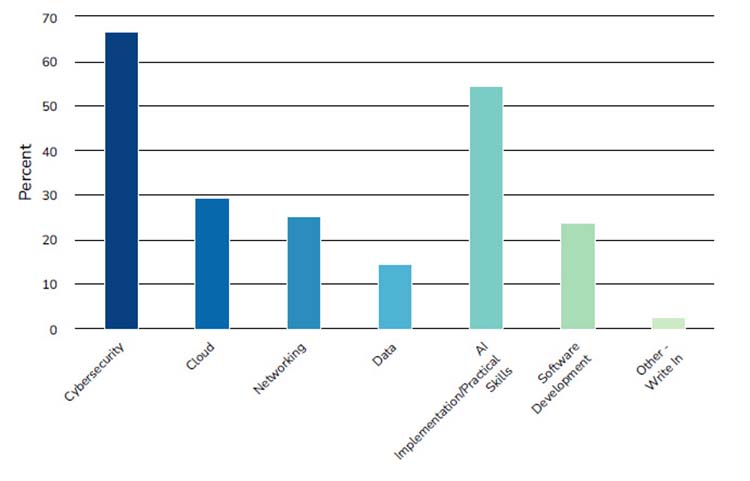
Skills areas that are most challenging right now
AI is top of mind and will take the lion’s share of training over the coming year, with 76% of respondents planning to invest in AI and emerging skills. Technical training is also under the spotlight, with 61,3% of respondents planning to invest here. Compliance is on the radar for 40% of organisations, leadership (37,3%) and soft skills (29,3%).
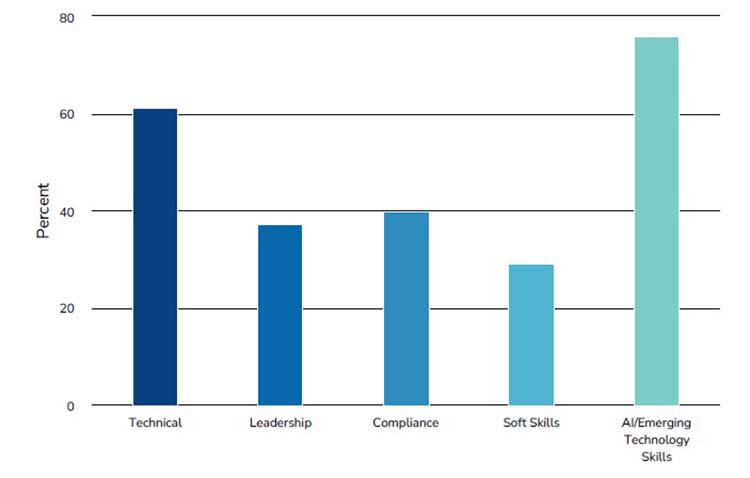
Type of training companies plan to invest in over the next 12 months
While company-specific training and certification is important in many instance, a major of companies (85%) look for independent IT certifications when hiring of when the decide on staff development.
Across Africa, online training is gaining in popularity. A massive 68% of respondents prefer online self-paced learning and 49,3% choose live online courses. In-person training was selected by just 33,3% of companies, and hybrid learning by 36%.
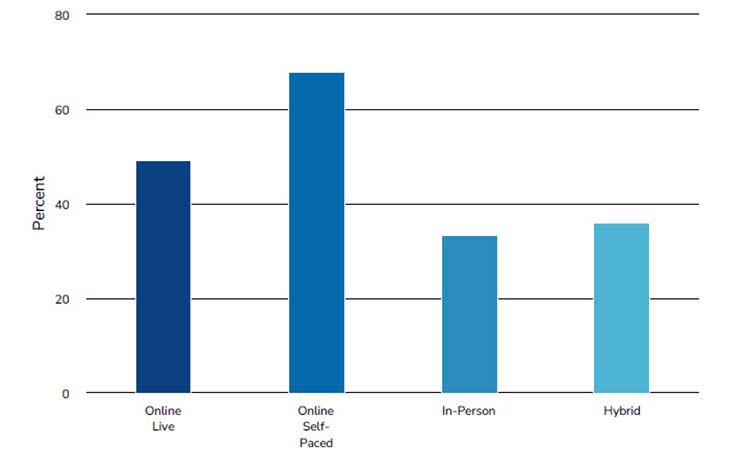
Delivery format preferred for training
Training is also sourced mainly online, with 57,3% of companies using online platforms. Internal resources account for 50,7% of training, and external providers for 34,7%. Vendor-specific courses account for 40% of training provided.
Frequency of training is still lacking in many companies. A significant number of companies (13,5%) never invest in training at all, and 60,8% only budget for one to two certification programs per year. Just 6,8% of respondents invest more than five times per year, and 18,9% do three to five certifications.
Cost plays an outsize role in determining what training companies invest in, cited by 69,3% as the most influential factor. This is followed by relevance (60%), accreditation (42,7%), flexibility (36%) and trainer reputation (25,3%).
Training budgets for companies across Africa is constrained: the majority (65,3%) spend just $100 to $200 per employee per year, with 25,3% spending between $200 and $500 and just 9,3% spending more than $500.
Going forward, African companies are expecting massive skills gaps to open up, particularly in AI (82,7%) and cybersecurity (69,3%). They are not alone, however: respondents expect to experience skills shortages in cloud computing (44%), Internet of Things (38,7%) and data analytics (37,3%) as well.
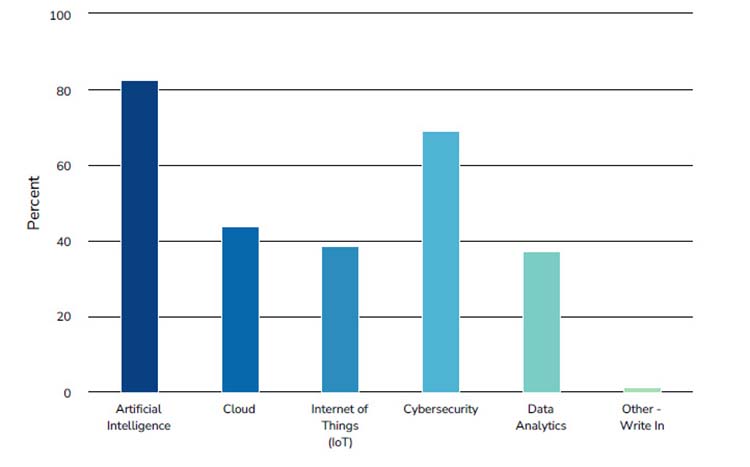
Emerging technologies where a future skills gap will emerge