
We know we’ve said it for decades – so much so it’s almost become a cliché: But the South African IT distribution channel is no place for the faint-hearted!
Year after year, veterans of the sector lament just how competitive, how cut-throat, and simply, how tough it is to not only survive in the channel, but to actually thrive.
But testament to their (and the channel’s) resilience is the fact that they’re still here … and still able to tell you how hard business is, the various rollercoaster rides they’re faced with, the very unique obstacles (crime, in particular!) they have to deal with, and then with a shrug get back to the business of serving their customers.
And this year is proving to be no different.
Geopolitical tensions continue to disrupt supply chains; ‘Trump Tariffs’ and sanctions on certain vendors continue to sow fear, uncertainty, and doubt; the rand continues to perform like a tea bag being dunked by a penniless pensioner; crime targeted at distributors and their stock continues unabated and unchallenged; government’s proposed infrastructure boost seems to have stalled; corporates are treating every penny as a prisoner; and consumers, bearing the brunt of a stagnant economy, are more and more reluctant to part with their hard-earned cash.
And, again no different from any other year, the country’s distributors and resellers dust themselves off, jut out their jaws ready to face the next challenge, and get on with business. Mark Davison spoke to some of the channel’s leading players to find out how the first half of the year has been – and how they’re preparing for the rest of what promises to be another tumultuous year.
As the channel entered 2025, there was distinct optimism among the majority of the country’s leading distributors that we’d finally shrug off the sluggish results of the past few years and see an upturn back to a boom period not seen since work from home (WFH) was foisted on the world due to Covid-19.
After all, this year not only marks the end of life of Windows 10; there was the expected standard refresh expected of those self-same WFH devices; and the promise from vendors of a new generation of AI-enabled technology ready to be unleashed on customers.
 But the first six months of the year haven’t quite panned out as expected … as explained by Pinnacle CEO, Tim Humphreys-Davies.
“The first half of 2025 has been nothing short of a challenge, as I am sure the rest of the market would agree with!” he says. “A very slow start to the year with a poor January, and then an explosion of activity in February and March followed by the traditional April slow down which put the brakes on the positive momentum.
“We did see an increase in activity towards the end of May and going into June, which is encouraging, but external macro factors continue to upset the equilibrium very easily and there seems to be a degree of nervousness to commit to large investments or projects.
“The delay in approval of the fiscal framework/budget has had an impact on government spend and payments, and this has worked its way through the industry,” Humphreys-Davies continues. “But with real take home earnings at a three-year high and interest rates trending down, we are hoping for a recovery in retail in the third and fourth quarters of the year – and the positive impact this can have in the SMB space.
“The large commercial sector remains constrained, but with pockets of growth in cybersecurity and storage,” he adds. “We’re hoping this sector, though, will recover in the coming months.
Humphreys-Davies remains buoyant about prospects heading into the second half of the year.
“If the reforms we’re currently seeing in electrical supply and transportation continue and are effective, this will give confidence to increase the current 10% of GDP in fixed investment towards the desired 30% that will stimulate the economic growth that we all need,” Humphreys-Davies says. “And if this happens, we’re confident that sectors such as end user compute that have been lagging will start to grow again and that this will boost the whole IT industry towards positive growth.
“The reseller base can then capitalise on this and sell the solutions that the market needs.
“So, yes, we anticipate a return to year-on-year growth from the fourth quarter of the year – and that this trend will continue into 2026,” he says.
“But working capital and tight opex management will remain critical for all members of the ecosystem,” Humphreys-Davies cautions.
Neels Coetzee, MD of Mustek, has little doubt that the characteristic resilience of the local channel will win through.
“South Africa’s IT sector faces slow growth, high interest rates, and macroeconomic uncertainty,” Coetzee says. “Yet technology – and the channel – remains resilient.”
He says the main global economic factors affecting the PC market this year include artificial intelligence, heightened global risks, and tariff uncertainties.
“Resellers need to pivot from traditional product sales to integrated solutions,” Coetzee advises. “This involves bundling hardware, software, and consulting services to increase value and margins. Emphasis needs to be placed on value-added services and deeper customer engagement.”
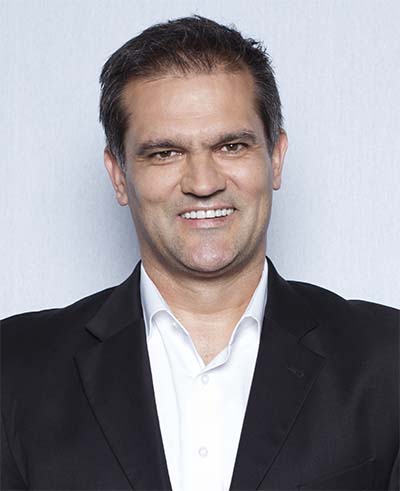 Coetzee adds that he has identified four core technology trends which he feels are currently shaping the future of IT distribution:
- Artificial Intelligence and machine learning: AI is rapidly transforming business operations and decision-making processes.
- Hybrid & multi-cloud infrastructure: Demand is rising for cloud-ready hardware, integration, and management tools as organisations seek agility and resilience.
- Next-generation networking and connectivity: The proliferation of 5G and IoT requires secure, high-performance networks, opening avenues in SD-WAN, advanced networking gear, and managed services.
- Cybersecurity solutions: As threats escalate, the need for holistic security solutions – encompassing hardware, software, and services – is more urgent than ever.
“So there are reasons for optimism,” Coetzee says. “Digital transformation is accelerating, IT infrastructure remains mission-critical, and differentiation and innovation in this space will position companies for the future.
“Emerging technologies are reshaping IT distribution,” Coetzee adds. “And those who adapt will lead.”
As we eluded to in the blurb for this article – and as can be seen from commentators – “resilience” is the key word used to describe South Africa’s distributors and resellers. Others, though, would include “adapt” and evolve. The local channel has been doing both – constantly and consistently – since its advent in the late 1980s.
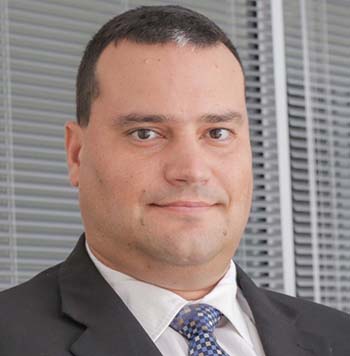
Channel veteran Werner Herbst, MD of First Distribution, is no stranger to all three descriptions.
“The first half of 2025 has been characterised by a spirit of resilience and realignment within the South African channel,” Herbst says. “As market conditions evolve and customer expectations shift, First Distribution has remained agile while navigating a landscape influenced by economic pressures and changing procurement behaviours.
 “In the volume distribution space, partners have faced headwinds driven by tighter budgets and extended decision-making cycles – with a growing emphasis on cost-consciousness and value delivery,” he explains. “Amid these challenges, value distribution has presented a more strategic and opportunity-rich avenue.
“While not without its complexities, this space has allowed for greater differentiation through deeper customer engagement, solution-led sales approaches, and a stronger focus on long-term outcomes. By continuing to prioritise cloud, cybersecurity, and AI-powered platforms, we have supported our partners in unlocking new growth pathways and advancing digital transformation journeys – even in a demanding environment.”
Herbst feels that the remainder of the year could be as restrained as the first six months but, like most in the channel, remains cautiously optimistic.
“Looking to the remainder of the year, we foresee continued strain on traditional volume-led models,” he says. “However, we also anticipate a rising demand for integrated solutions and managed services as customers seek more holistic, cost-effective approaches.
“Partners who diversify their portfolios, embrace multi-cloud strategies, and collaborate closely with vendors on enablement and upskilling will be well-positioned to lead in this next phase. Additionally, the evolution of hybrid IT and selective cloud repatriation will further drive conversations around flexibility and optimisation.
“And, as a trusted distribution leader, we remain steadfast in our commitment to equipping our channel ecosystem with the tools, insights, and collaborative support needed to thrive,” Herbst adds. “While the road ahead may present new challenges, we are confident that through continued innovation and partnership, the channel will emerge more adaptive, resilient, and ready for the future.”
Take home pay may be at its highest level in the past few years, but consumers – which the channel traditionally relies on for volume sales – have tightened their purse strings so far this year.
 “Due to a reduction in consumer spend and muted growth in the economy, the ICT market is under pressure,” says Spencer Chen, MD of Rectron. “Yet there are still opportunities to be had.
“Smart companies understand that investing in professional services and superior skills can make a difference in an increasingly demanding and technically developed economy,” he adds. “They are spending time researching increased productivity, output and working capital, and they understand that technology is a critical element that, with the right investment, can affect radical changes.
“South African SMBs can play a major role here as they contribute significantly towards job creation, economic output, and diversification. They are easily able to adapt to market changes and demands, and invest in new solutions businesses quickly.”
And like all distributors, Chen says Rectron is ready to help its partners through the tough times as well as the good ones.
“Our investment into solutions-based offerings like DJI enterprise and agricultural drones, as well as the Zebra in the point-of-sale and solutions category, has proven to be a sound strategic focus – particularly in this SMB segment,” Chen says. “Our product line up and skills investment is perfectly positioned to allow resellers to take advantage of these markets and to assist our core resellers to expand and stay healthy in these challenging times.”
Linqage director, Ivan Blacher, says he remains cautiously optimistic about the current state of the market and, like Chen, has taken some positive steps towards better servicing the company’s partners.
“We have expanded our product portfolio with the addition of Fanvil and Molex, indicating strategic growth and diversification, and potentially opening new market segments and strengthening the competitive position of our partners,” Blacher says. “Another positive for us is our new Bloemfontein branch – opened late last year – which is starting to show promise. This suggests successful regional expansion and a growing footprint which is a good indicator for future revenue streams.”
Blacher does, however, agree with his counterparts that the first half of the year hasn’t been plain sailing.
 “While we have experienced growth, it has been slower than usual,” he says. “This suggests that market conditions have been challenging or that the economic climate has impacted our typical growth trajectory,” he says. “This could be due to broader economic headwinds, increased competition, or other market-specific factors that are slowing down the overall pace of business.
“But overall, Linkqage is demonstrating resilience and strategic foresight by expanding its offerings and geographical reach – even in a period where growth is not as robust as we might typically experience,” Blacher says. “The success of the Bloemfontein branch and the new agency partnerships are key indicators of our ability to adapt and find new avenues for success despite a potentially tougher market.”
Ed Renno, MD of accessories distributor Fast Forward, says the company has experienced moderate, but steady, growth in H1 of 2025.
“We’ve actually seen strong growth in the premium wearables segment with smart rings and earbuds leading the way,” Renno says. “The mainstream and mobile accessories sector remains stable, but has become exceptionally competitive – and with narrow margins.”
Renno says that the next six months could be heavily influenced by political factors and tariffs. “This could severely affect consumer sentiment and pricing.
 “In short: The IT accessories market remains healthy, buoyed by durable trends in wireless technology, wearables, remote work tools, and green products,” Renno says. “But caution is warranted. Consumer sentiment and price competition could dampen momentum if macro-economic factors like tariffs intensify.”
As always, though, the South African channel will be prepared for anything thrown at it over the next few months. And, as always, its keyword will be “resilience”.