
Formula One has always been a sport of reinvention. From the screaming naturally-aspirated engines of the past to the turbo-hybrid power units of today, the technological landscape of F1 has constantly evolved in step with engineering advancement and global automotive trends.
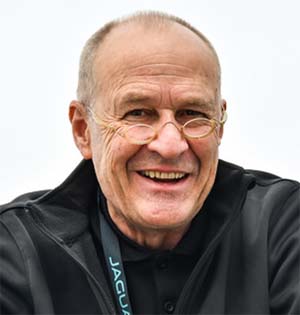 By Graham Duxbury
Now, with the 2026 season upon us, the sport finds itself at another critical crossroads. A sweeping overhaul of the power-unit regulations underlines a radical shift in power unit philosophy, driven by manufacturers who insist on making F1 more relevant to future road technologies by emphasising electrification and energy conservation.
Mercedes, Audi and Honda, among others, have pushed for regu
lations that make F1 more relevant as a research and development platform. To retain their interest and investment, F1’s rule makers (the FIA) have responded with a mandate for significantly increased electrical power and greater sustainability.
Central to the new rules is the requirement that electrical energy must provide nearly 50% of the car’s total power output – a sizable leap from current levels. To meet this demand, the 2026 cars will need to deliver nearly three times more electrical energy – up from 120kW to around 350kW.
The 2026 F1 car’s internal combustion engine (ICE) is expected to deliver around 400kW, down from around 560kW. However, together with the electrical motor, a total of around 750kW (1,000 horsepower) will still be available – but with significantly improved efficiency.
For example, in 2013, cars typically burned around 160kg of fuel over a race distance. By 2020, that figure had dropped to 100kg. The current target is just 70kg of carbon-neutral synthetic fuel per Grand Prix.
This is a remarkable reduction that, in the heat of competition, will place enormous emphasis on strategic energy harvesting, storage and deployment. That said, there will be a ceiling on electrical energy generation per lap of 8.5Megajoules, reduced to 8MJ when so mandated by the FIA.
Another technical evolution sees F1 moving from a maximum fuel-flow limit to a maximum energy-flow limit of 3,000MJ per hour encouraging teams to maximise energy recuperation efficiency in an era when multiple forms of propulsion coexist.
This isn’t the first time F1 has faced the momentous challenges of a substantial transformation. Throughout F1 history, seismic shifts in engine regulations have often defined entire eras.
In the 1980s, the 1.5-litre turbocharged cars reigned supreme, before being outlawed in favour of naturally aspirated V10s and V12s in 1989.
This transition not only changed the sound and performance of the cars but also reshuffled the competitive hierarchy. Teams that had mastered turbo technology suddenly found themselves struggling, while others, like Williams and Benetton, rose to prominence in the naturally aspirated era.
A decade later, the early 2000s saw Ferrari and Michael Schumacher dominate with 3.0-litre V10s, only for the sport to downsize to V8s in 2006, ushering in a new competitive balance. The reduced displacement – combined with lower engine rev limits – forced teams to change their designs and the drivers adapt their techniques.
Then came the 2014 hybrid revolution, a shift as significant as the move from turbos to naturally aspirated engines. The introduction of complex kinetic energy recovery systems (KERS) and turbo-hybrid power units changed F1’s DNA overnight.
Now, with turbo-hybrid engines already criticised for muted sound and complexity, 2026 rules will likely make cars even quieter and – together with new integrated aero rules – definitely more complex.
Will this change in the fundamental architecture of F1 cars risk alienating fans nostalgic for the emotional and sensory highs of the naturally-aspirated era?
There have been repeated calls for a return to high-revving V10s running on synthetic fuels. The prospect gathered such momentum that, earlier this year, FIA president Mohammed Ben Sulayem advocated for scrapping hybrids in favour of V10s running under a green-fuel mandate. It sparked widespread discussion.
In the end, however, all five active engine manufacturers committed to the 2026 regulations – albeit with an openness to continued dialogue.
Looking beyond 2026, much will depend on how the new regulations perform in practice. If the new cars produce closer racing, maintain competitive diversity and attract new manufacturers, the rules will likely be extended.
But if the sport struggles with complexity, escalating costs or fan engagement, the door to a V10 revival may open wider as F1 approaches the 2030s.